FBE and glass flake epoxy are not interchangeable versions of the same coating. Your choice depends on pipe geometry, exposure, temperature, installation stage and the inspection evidence required; the coating thickness alone cannot settle it. By the end, you can define the service, compare quotations and identify the tests needed before accepting the work.
Key takeaways
- Choose FBE for factory-applied pipe protection and repeatable production control.
- Choose glass flake epoxy for site repairs, complex geometry, or immersion exposure.
- Define blast cleanliness, profile, thickness, cure and inspection before comparing prices.
- Appoint a provider component by component, not through one generic coating specification.
FBE and glass flake epoxy solve different coating problems
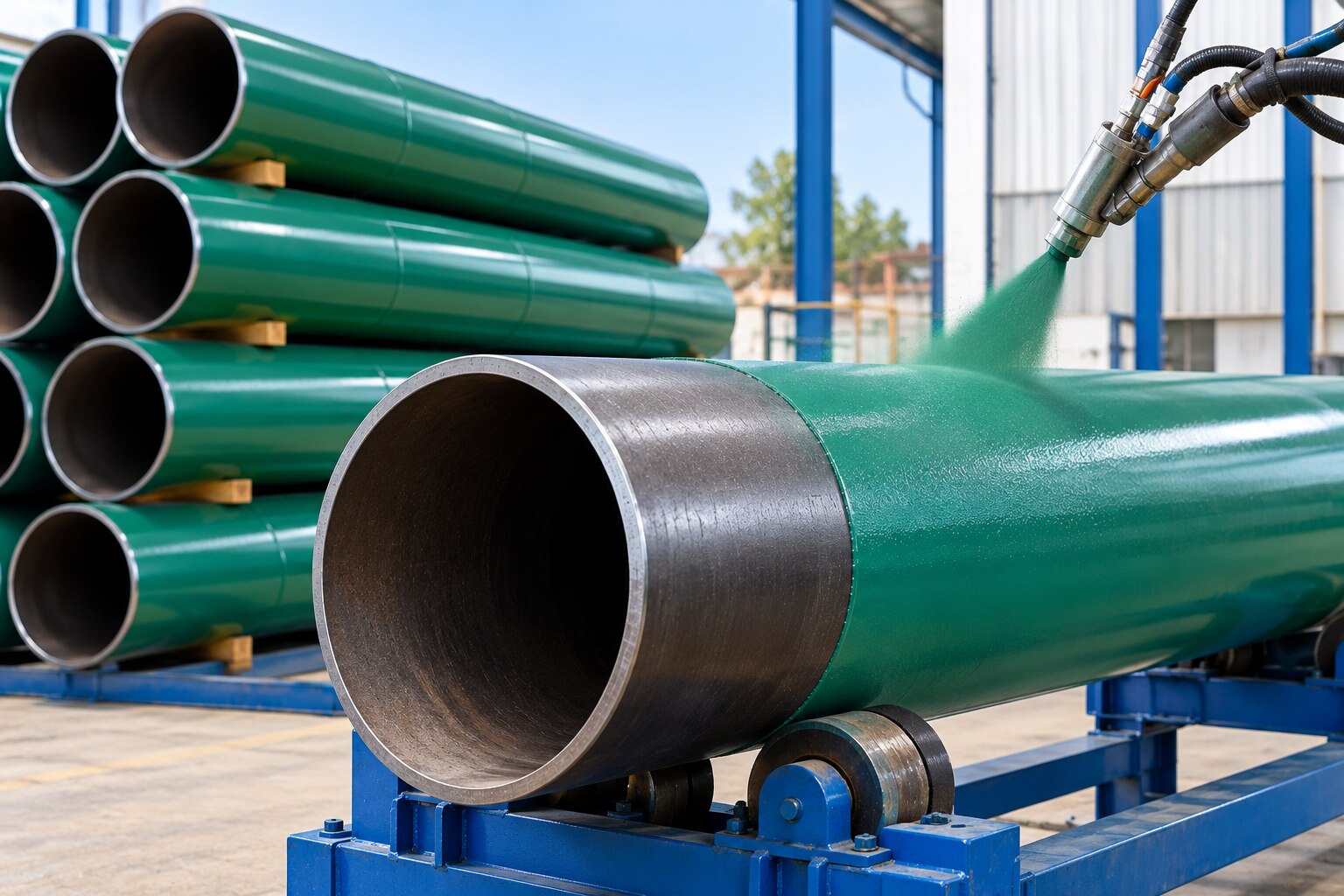
A mild steel pipe FBE service uses a factory-applied thermoset powder. The pipe is heated, electrostatically coated, and held at the product’s specified steel temperature until the powder fuses and cures.
Glass flake epoxy is a liquid resin loaded with platelet-shaped glass flakes; it cures after application and forms a barrier with a more tortuous path for moisture and chemicals.
| Feature | FBE | Glass flake epoxy |
|---|---|---|
| Substrate and geometry | Best controlled on straight, rotating pipe | Suits complex fittings, valves, spools and repairs |
| Application | Preheat, electrostatic powder spray and fusion cure | Blast, mix and apply liquid coats, then ambient or forced cure |
| Main selection basis | Line-pipe production and defined buried-service systems | Chemical immersion, wastewater, acidic service or solvent exposure |
| Evidence to request | ISO 21809-2 qualification and specified field-joint system | Resin chemical-resistance table and immersion data for the exact formulation |
Do not compare these systems by nominal dry-film thickness alone. A pipe FBE coating service depends on controlled heating and uniform coverage; glass flake performance depends on resin chemistry, flake loading, coat build and complete cure.
Specify the exposure, service temperature and geometry before choosing a glass flake epoxy coating in Ahmedabad or FBE for a particular pipe.
Choose the system from exposure, geometry and installation stage
Straight, rotating pipe destined for buried external service is usually the strongest case for FBE. The factory applies and heat-cures the powder under controlled conditions, then ships the coated pipe for field-joint treatment. For mild steel pipe coating in Ahmedabad, identify ISO 21809-2, pipe dimensions, service temperature, thickness class and field-joint system before approval.
| System | Choose it when | Check before approving |
|---|---|---|
| FBE | The pipe is straight, accessible and coated before installation; buried service and defined external exposure suit this process. | Confirm the product’s steel-temperature and cure-time window, plus holiday testing and field-joint compatibility. |
| Glass flake epoxy | The asset has valves, fittings, site-installed spools, atmospheric steel, wastewater immersion, acidic service or solvent contact. | Require the resin’s chemical-resistance table, immersion evidence for the actual medium, specified flake loading, coat build and cure schedule. |
| Combination | The pipe receives factory FBE but fittings, repairs or field joints need liquid coating. | Confirm surface-preparation, overlap and compatibility requirements between systems. |
Choose glass flake epoxy coating in Ahmedabad for geometry that prevents uniform heating or powder access, not simply because it promises a thicker film. Select its resin for the actual chemical and temperature duty; a generic “glass flake” label proves little.
FBE remains preferable when controlled factory application and repeatable coverage matter more than site flexibility.
Define surface preparation before comparing coating prices
Compare prices only after the specification names surface preparation and environmental controls; otherwise a low quote may omit work that prevents early coating failure.
1. Require abrasive blast cleaning to Sa 2½ under ISO 8501-1 for mild steel pipe, then record the surface profile with a suitable gauge. A visually clean surface can still have an unsuitable anchor pattern.
2. Include dust assessment under ISO 8502-3 and soluble-contaminant testing for chlorides or other salts where exposure or the specification warrants it. State the permitted flash-rust grade and reject steel that rusts beyond it before coating.
3. Record steel temperature, air temperature, relative humidity and dew-point spread during preparation and application. Keep steel at least 3°C above dew point unless the coating manufacturer’s data sheet requires a stricter limit.
4. For FBE, identify the powder product, preheat range and fusion-cure schedule; these values are product-specific, not a universal oven setting. For glass flake epoxy, specify resin system, number of coats, dry-film thickness, recoat window and chemical or immersion exposure.
For industrial pipe coating in Ahmedabad, schedule inspection and protected storage around humid or monsoon periods. Ask every bidder to price blasting, cleaning, environmental monitoring, repairs and hold-point inspection separately.
Know how each system is applied to pipe and fittings
FBE is a factory process: blast-cleaned steel is heated, electrostatically sprayed with thermoset powder, then passed through a curing cycle. Liquid glass flake epoxy is mixed on site or in a shop, applied by spray, roller or brush, and cured after each coat.
| Application point | FBE | Liquid glass flake epoxy |
|---|---|---|
| Steel preparation | Abrasive blast-cleaning, commonly Sa 2½ to ISO 8501-1, followed by controlled preheating | The same cleanliness requirement, plus strict control of dust, salts, moisture and surface temperature |
| Coating process | Powder melts and chemically cross-links in an oven; thickness is built in one continuous pass | Stripe-coat edges, welds and corners, then apply full coats within the specified recoat interval |
| Geometry | Best controlled on straight, rotating pipe that fits the oven | Suits valves, bends, fittings, fabricated spools and repairs that cannot enter an oven |
| Quality risks | Incorrect steel temperature or poor powder fusion causes pinholes and weak adhesion | Wrong mixing ratio, trapped solvent, excessive wet film or premature immersion causes soft or blistered coating |
A pipe FBE coating service still needs a qualified field-joint system for girth welds and handling damage. Choose a glass flake epoxy coating in Ahmedabad by resin chemistry, glass-flake loading, dry-film thickness and cure schedule—not by the product name alone.
Specify thickness, cure and inspection instead of asking for a generic coating
Require a project specification, approved product data sheet and inspection-and-test plan before work starts. For FBE, name ISO 21809-2 where it governs, pipe diameter and wall thickness, service temperature, coating-thickness class, powder batch and field-joint system.
For glass flake epoxy, record the resin chemistry, glass-flake loading, number of coats, specified dry-film thickness, recoat interval and immersion or chemical-resistance evidence for the actual service.
Your purchase order should require these records:
- Abrasive-blast report showing ISO 8501-1 Sa 2½ cleanliness, surface profile, dust rating and soluble-salt results where exposure warrants testing.
- Batch certificates, manufacturer’s application data sheet, steel and powder temperatures for FBE, and wet-film, ambient-temperature, relative-humidity and dew-point logs for liquid epoxy.
- Cure records confirming the manufacturer’s temperature and time; do not accept a universal oven setting for mild steel pipe coating in Ahmedabad.
- Final dry-film-thickness readings mapped by pipe section, plus visual inspection for runs, pinholes, blisters, burns and damaged edges.
- Holiday detection at the specified voltage, adhesion testing where required, and documented repair and retest results.
For industrial pipe coating in Ahmedabad, require calibration certificates for gauges and spark testers. Reject work with flash rust, exposed steel, uncured coating or unexplained thickness variation; a clean-looking surface alone proves none of these controls.
Use a component-by-component decision when appointing a coating provider
Do not issue one coating purchase order for every shape. Scope each component by geometry, access for abrasive blasting, heating, masking and repair; then name the coating, thickness, inspection and acceptance record.
- Straight pipe: Request ISO 21809-2 qualification, pipe diameter, wall thickness, steel temperature, coating-thickness class and holiday-testing method. Rotating pipe suits factory FBE because heating and powder fusion are controlled.
- Valves: Identify body material, bore, bonnet, stem, seats and flange faces. Mask moving parts and sealing surfaces, and confirm whether liquid glass flake epoxy is safer than FBE when the complete valve cannot be heated uniformly.
- Fittings: List elbows, tees, reducers and bends separately. Require a method for edge rounding, weld smoothing, internal access and thickness checks; complex geometry can favour liquid application over powder.
- Welds: State whether shop welds receive FBE, a compatible liquid repair coat or stripe coats. Require visual inspection and repair before the main layer.
- Field joints: Specify the joint preparation, overlap, cure window, holiday test and backfill release separately from factory coating.
For a mild steel pipe FBE service with glass flake epoxy coating in Ahmedabad, ask the provider to justify the system by exposure, not product name. A mild steel pipe coating in Ahmedabad tender should show these component-specific procedures; Heatman Products Pvt Ltd can be evaluated against the same checklist.
Related products
 | FBE COATING FBE Coating Service On Mild Steel Pipes Minimum Order Quantity 10 Meter Material Epoxy Coated Size 3 inch Usage/Application Oil & Gas, Water Coating Epoxy Coated Country of Origin Made in... View product → |
 | FBE COATING Coating Materials PE/PP Compound Layer Service Location Local Coating Method Spraying Duration 3-4 Days Payment Mode Offline/Online Service Mode... View product → |
Frequently asked questions
What is the difference between pipe FBE coating and glass flake epoxy coating?
FBE is a factory-applied thermoset powder fused onto heated steel. Glass flake epoxy is a resin coating containing plate-like glass flakes, applied in liquid layers by brush, roller or spray.
How should you choose between FBE and glass flake epoxy?
Base the choice on chemical and water exposure, pipe or fitting geometry, required thickness, repair access and whether coating occurs before or after installation.
What surface preparation should you specify for mild steel pipe coating?
Specify abrasive blasting cleanliness, surface profile, dust and soluble-salt limits, and the time allowed between blasting and coating. Do not compare prices without matching these requirements.
What coating details belong in an industrial pipe coating specification?
State the dry-film thickness, steel or ambient temperature limits, cure time, holiday-testing voltage, adhesion or visual checks, repair method and inspection records.
Related product
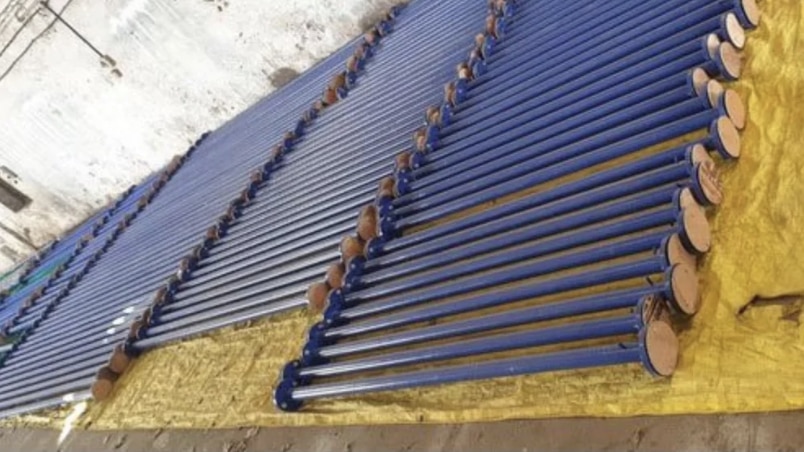 | Coated Pipe Material Mild Steel Size/Diameter 8 Inch Usage/Application Chemical Handling Single Piece Length 6 meter Country of Origin Made in India Shape Round... View product → |
Keywords